Trades, hedges and limits measured before they are made.
A trade, a hedge or a set of limits measured against the portfolio as held, and the crypto allocation measured within the whole fund.
Fund-level analysis and scenarios for crypto portfolios.
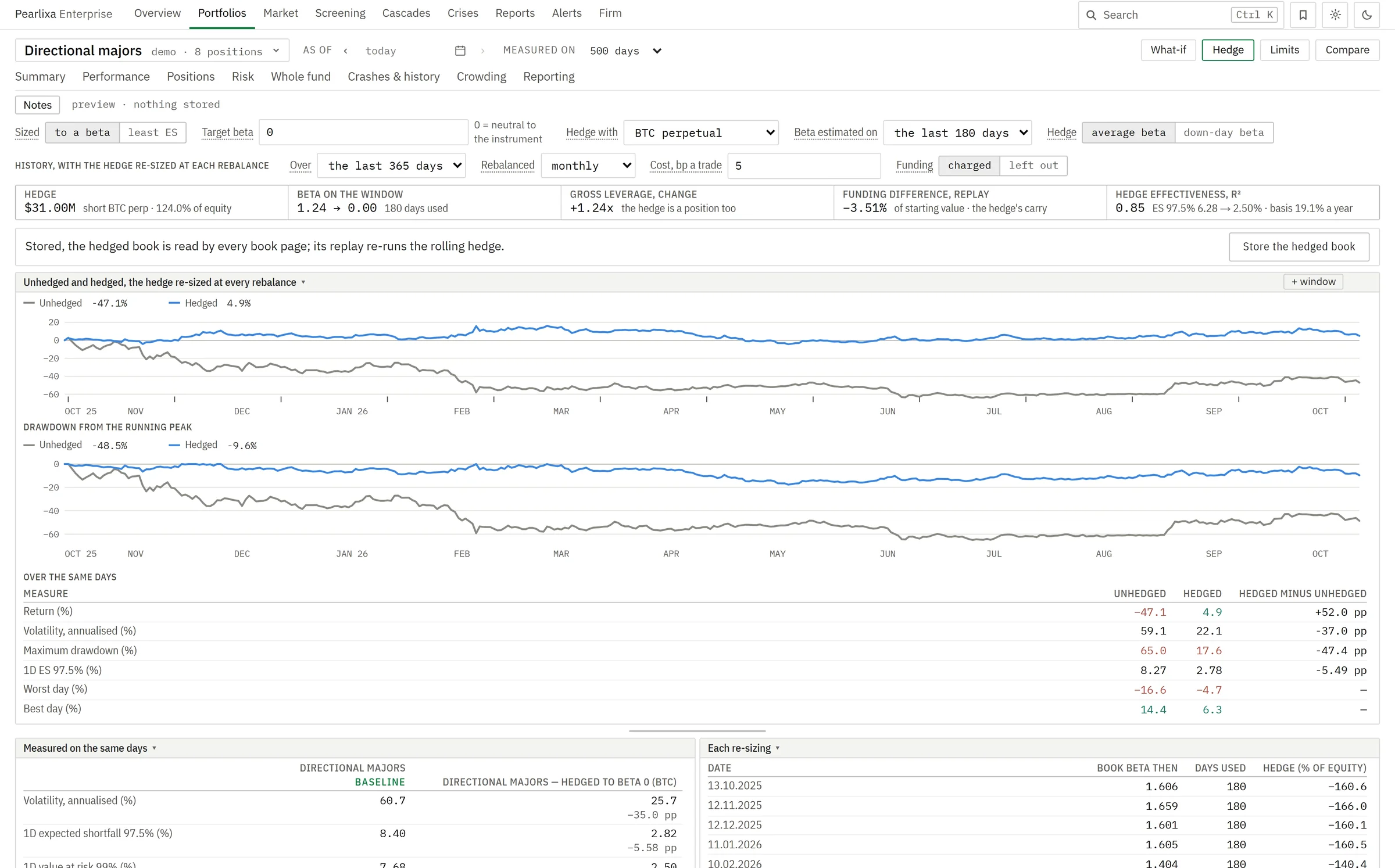
Pearlixa Scenarios measures a decision against the portfolio as held, before anything is traded. A manager can change the weights and see the risk before and after, with the trades it would take, their cost and the risk of trading them over several days, or hedge the portfolio with a perpetual future, sized to a beta of their choosing or to the size that leaves the least expected shortfall. A portfolio can also be built to the fund's own objective and constraints on positions, sectors, beta and trading cost, and the platform measures it beside the portfolio as held and shows which constraints bind.
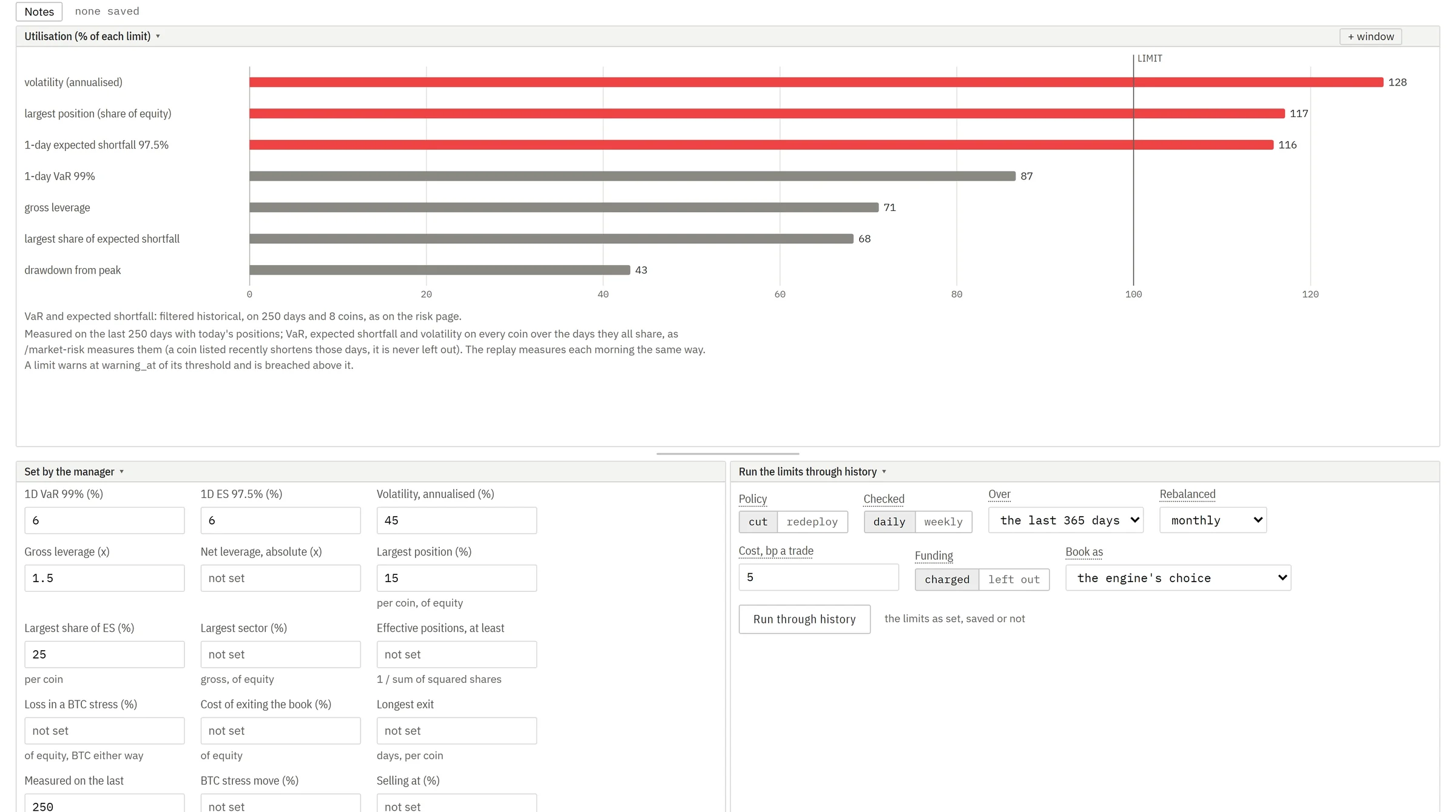
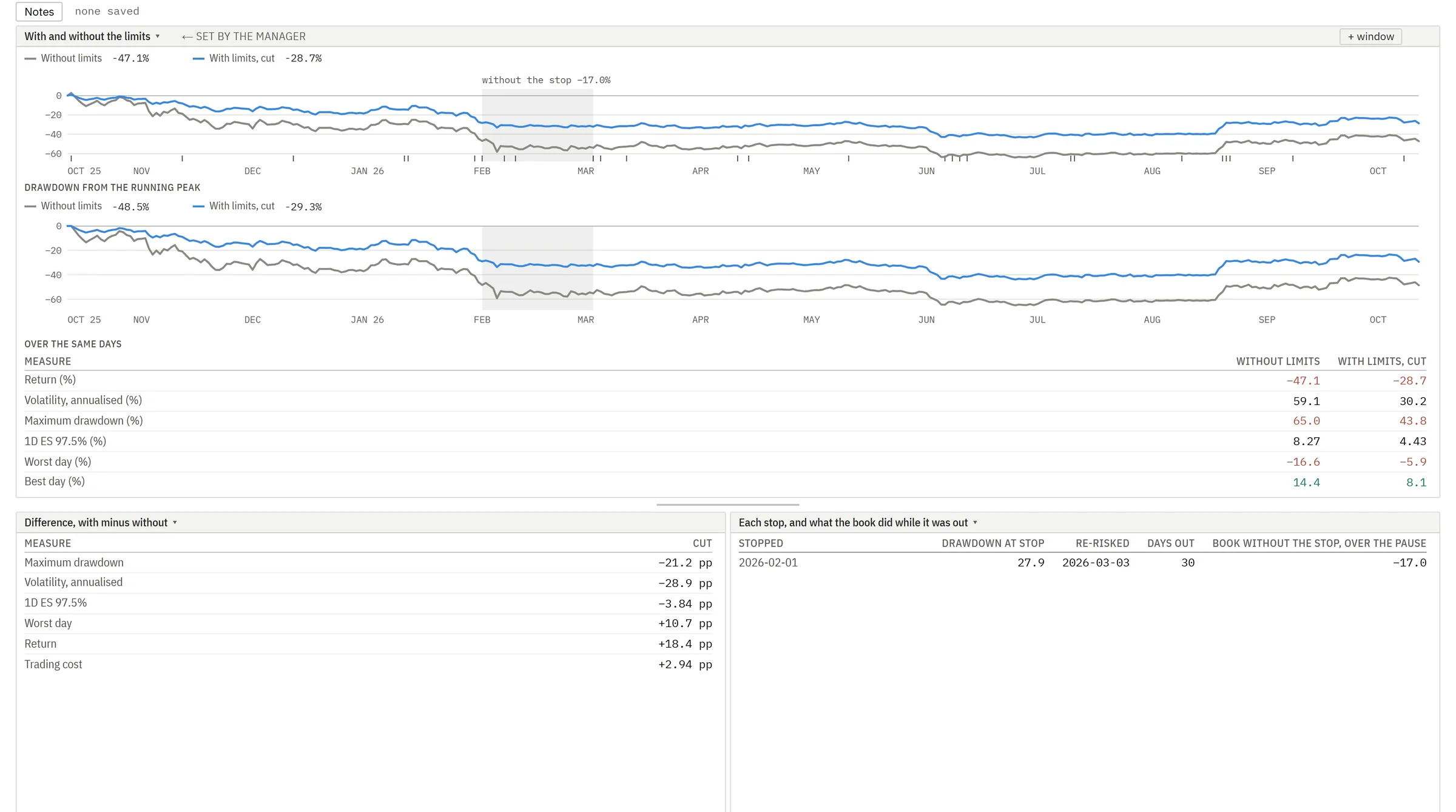
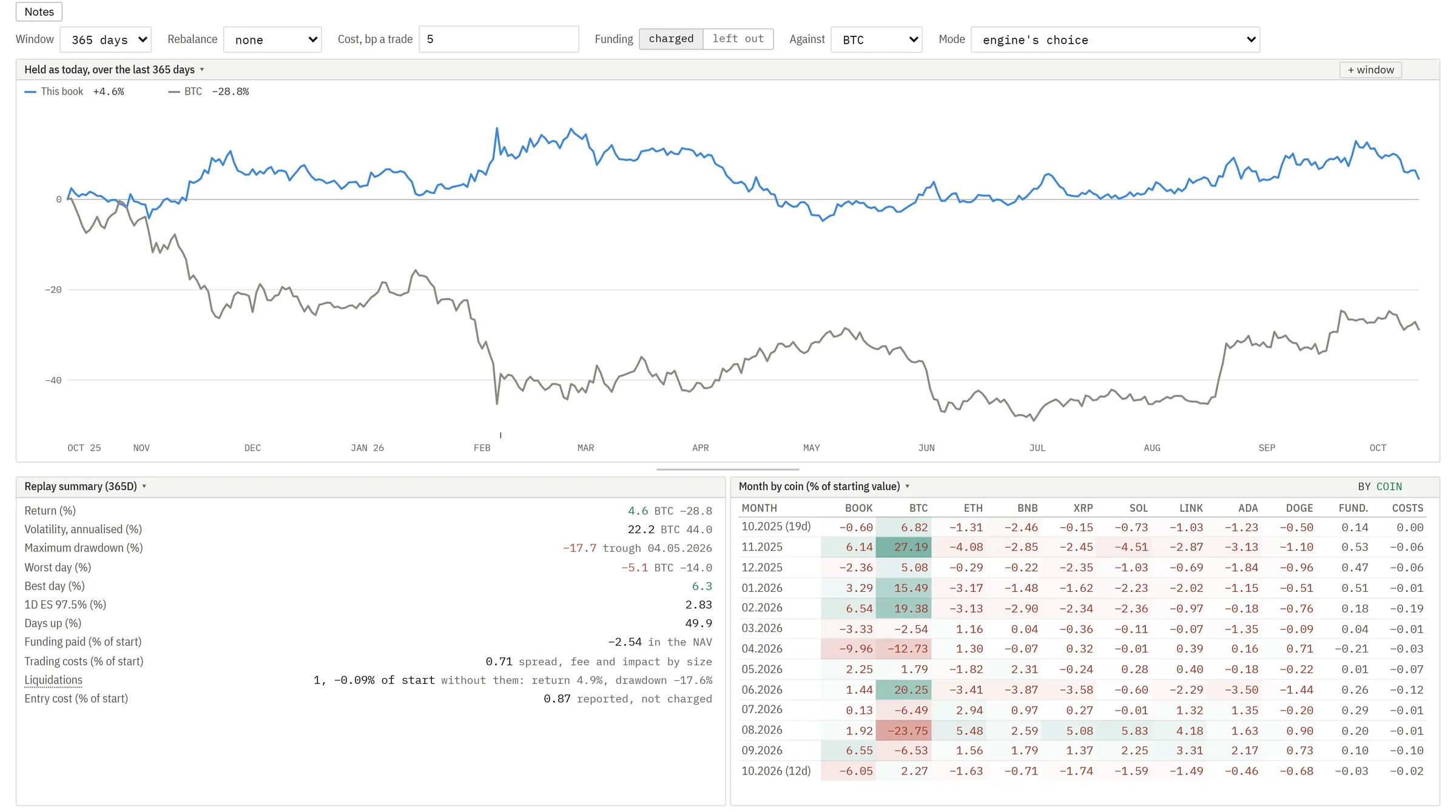
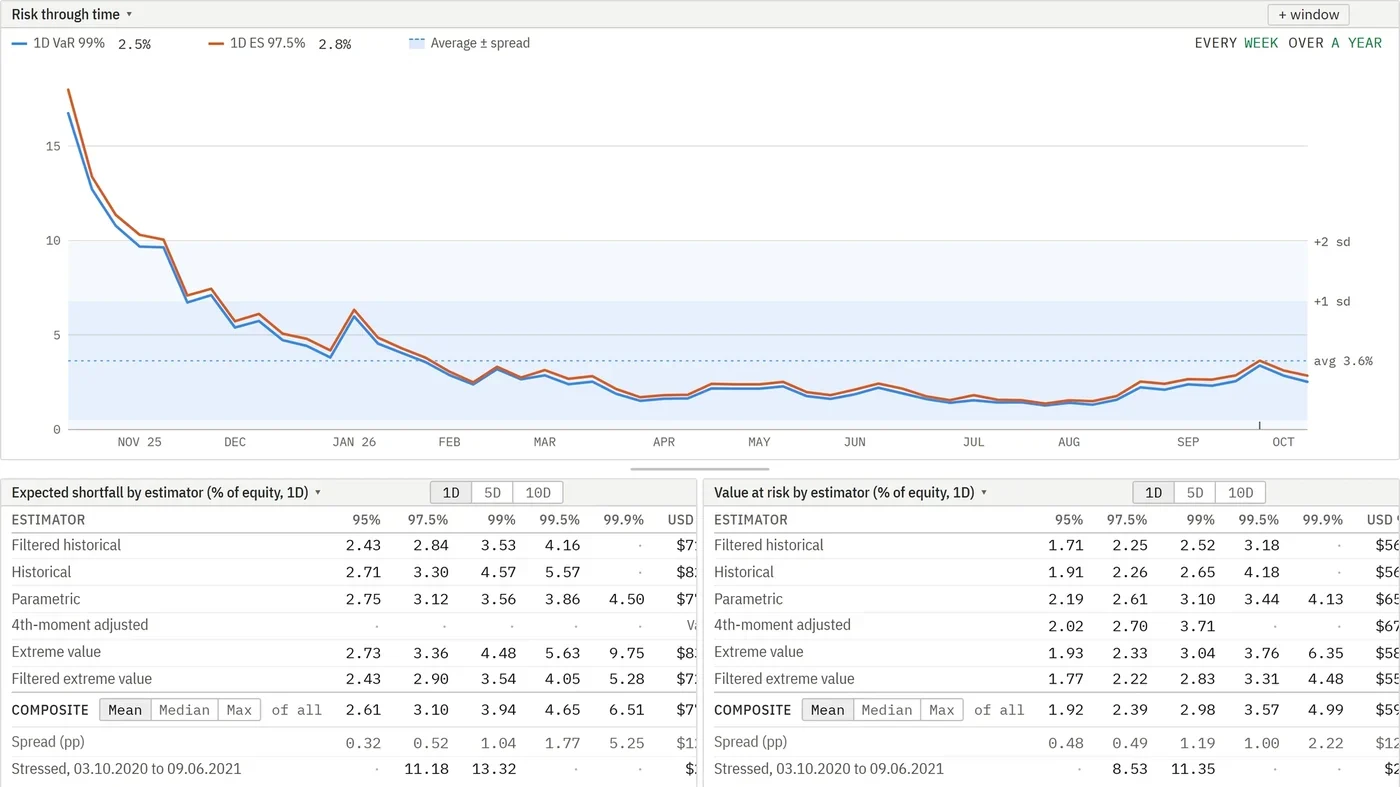
Limits on value at risk, expected shortfall, volatility, leverage, concentration, sectors, a bitcoin stress and the cost of exiting are checked against the portfolio as it stands. The firm can set its limits across portfolios in one tree, and by default each change waits for a second person's approval. The same portfolio can be run through the past year with and without them, on the same days and costs. Today's holdings can be replayed over the past year with funding, trading costs and liquidations charged, marked as hindsight rather than a track record.
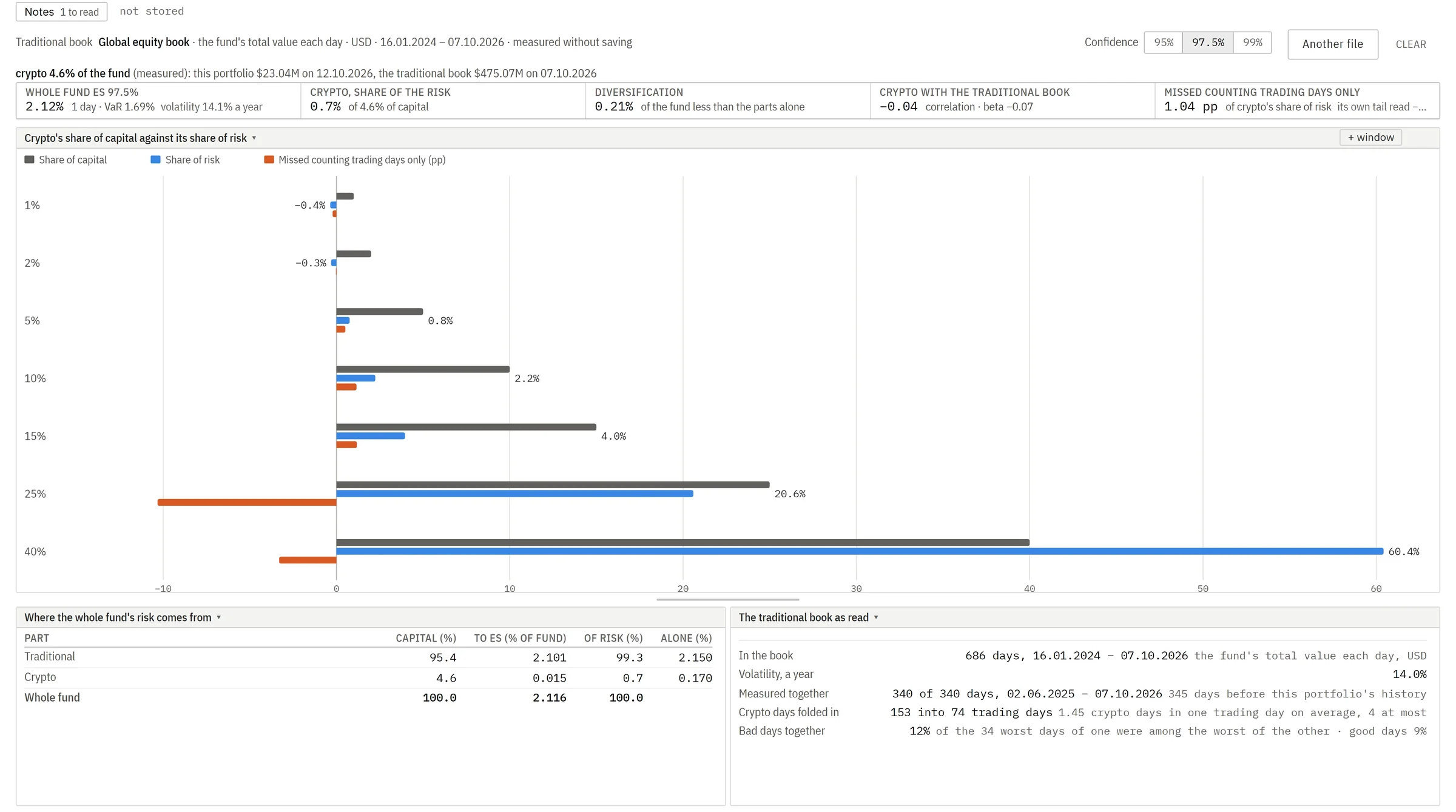
Above the crypto portfolio sits the fund. From one series of the traditional portfolio's value, the platform measures the two together: the whole fund's expected shortfall, crypto's share of it, and how that share would change at other allocations. Portfolios and benchmarks can be set side by side.
A decision, measured on one portfolio.
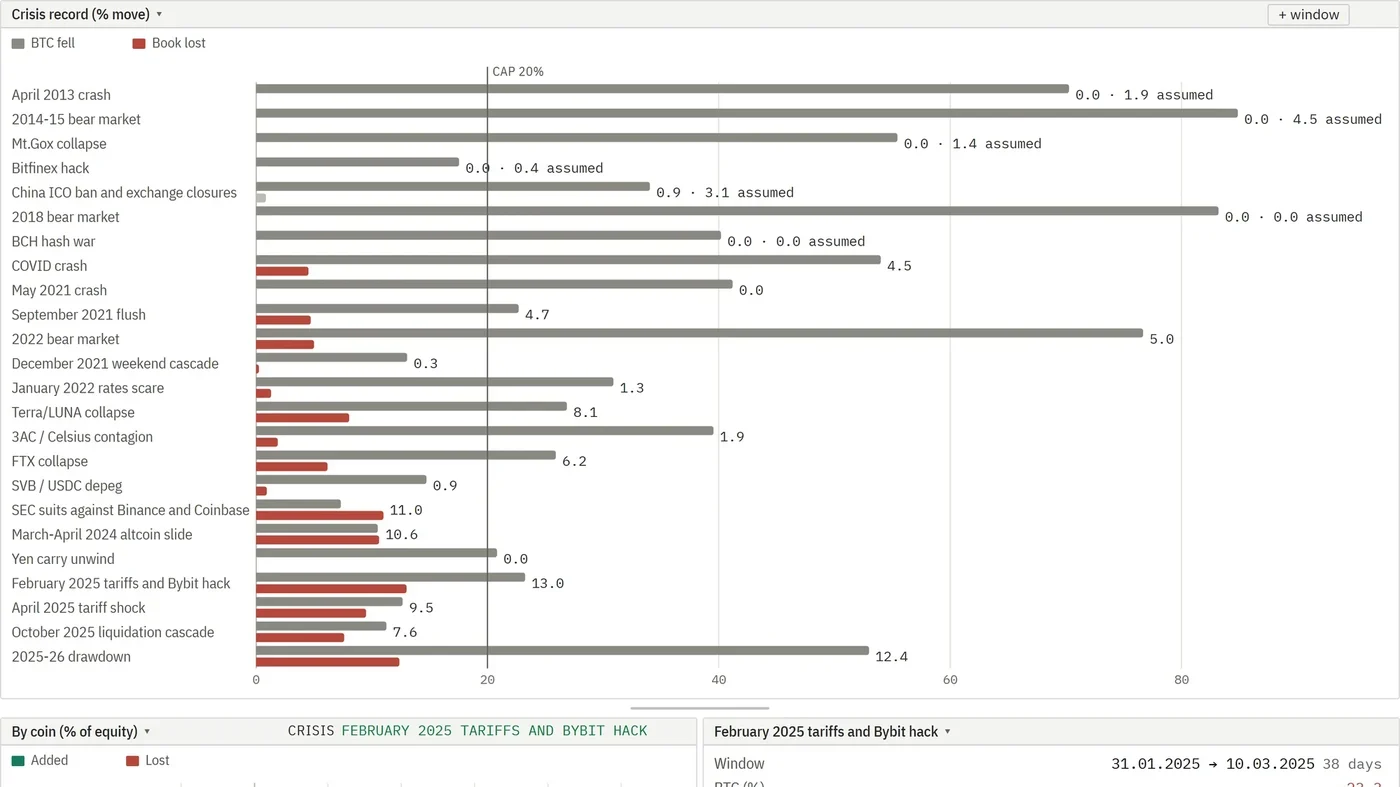
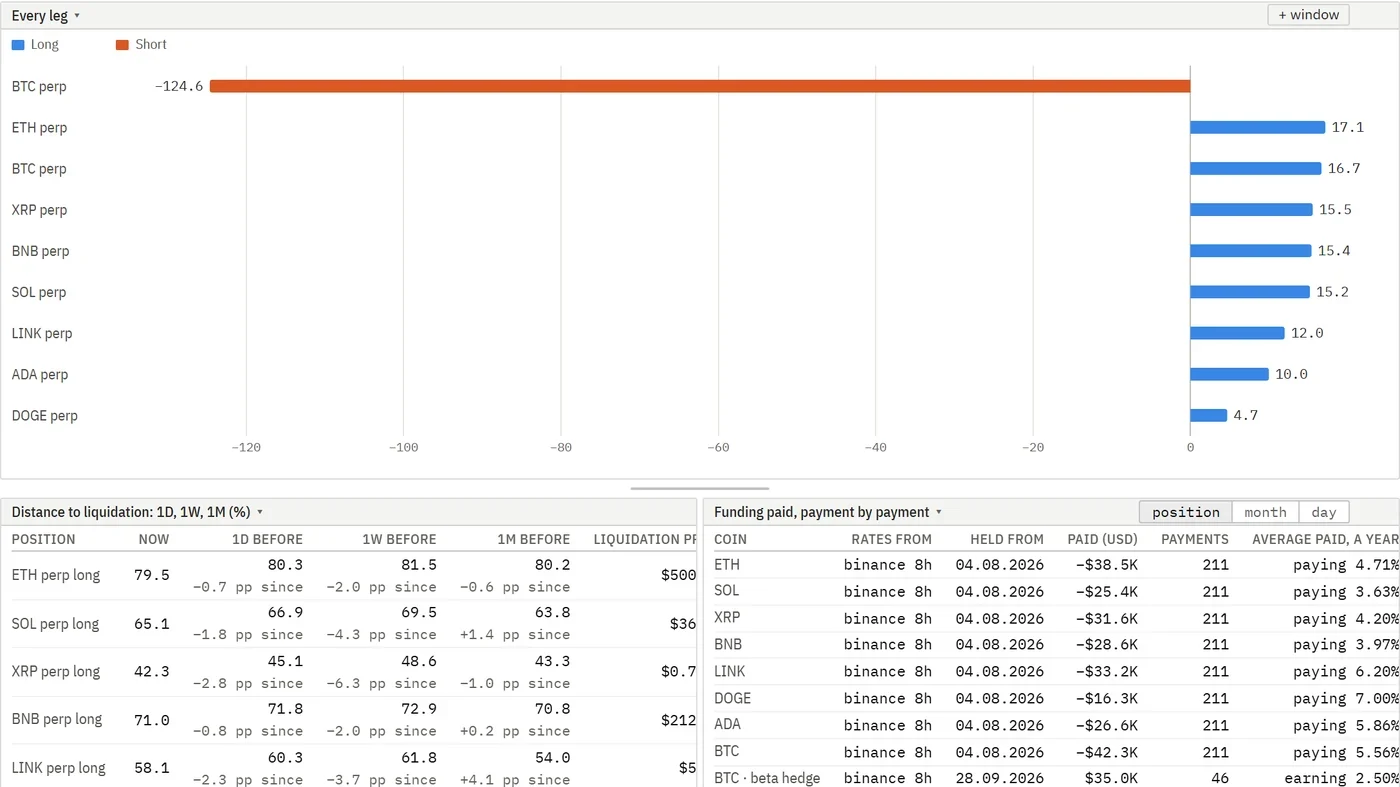
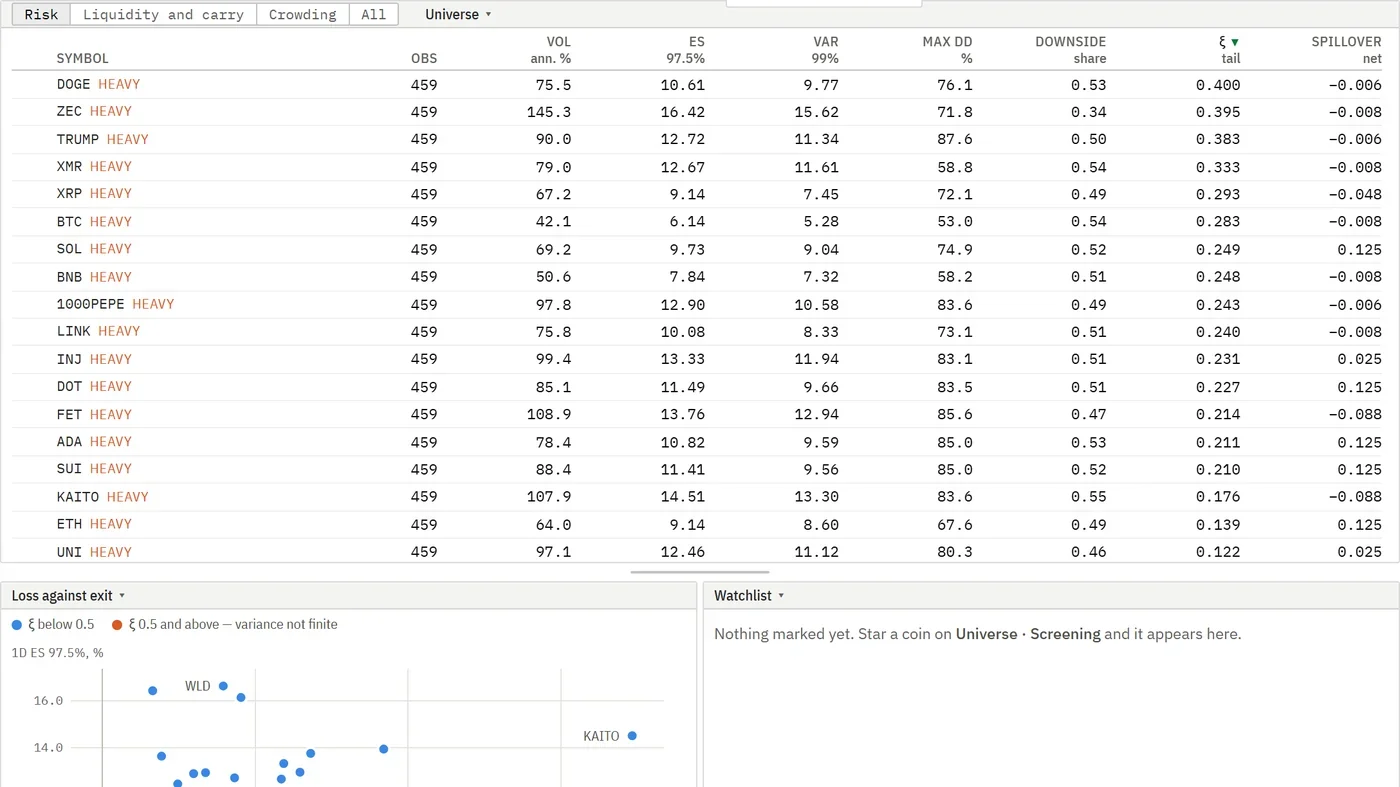
Six views from the what-if, limits, history, whole-fund and compare pages, shown on demonstration portfolios.
A change, before it is made
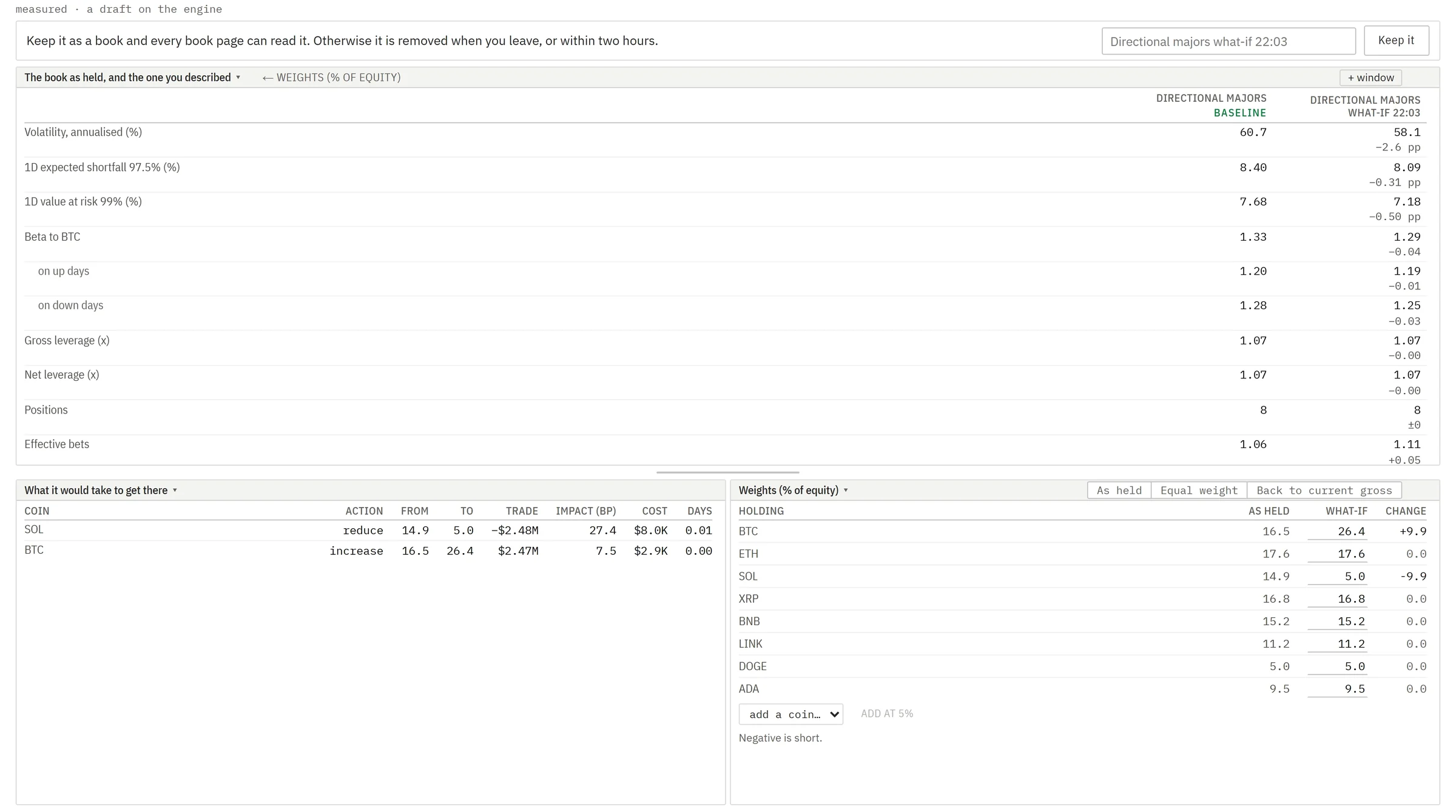
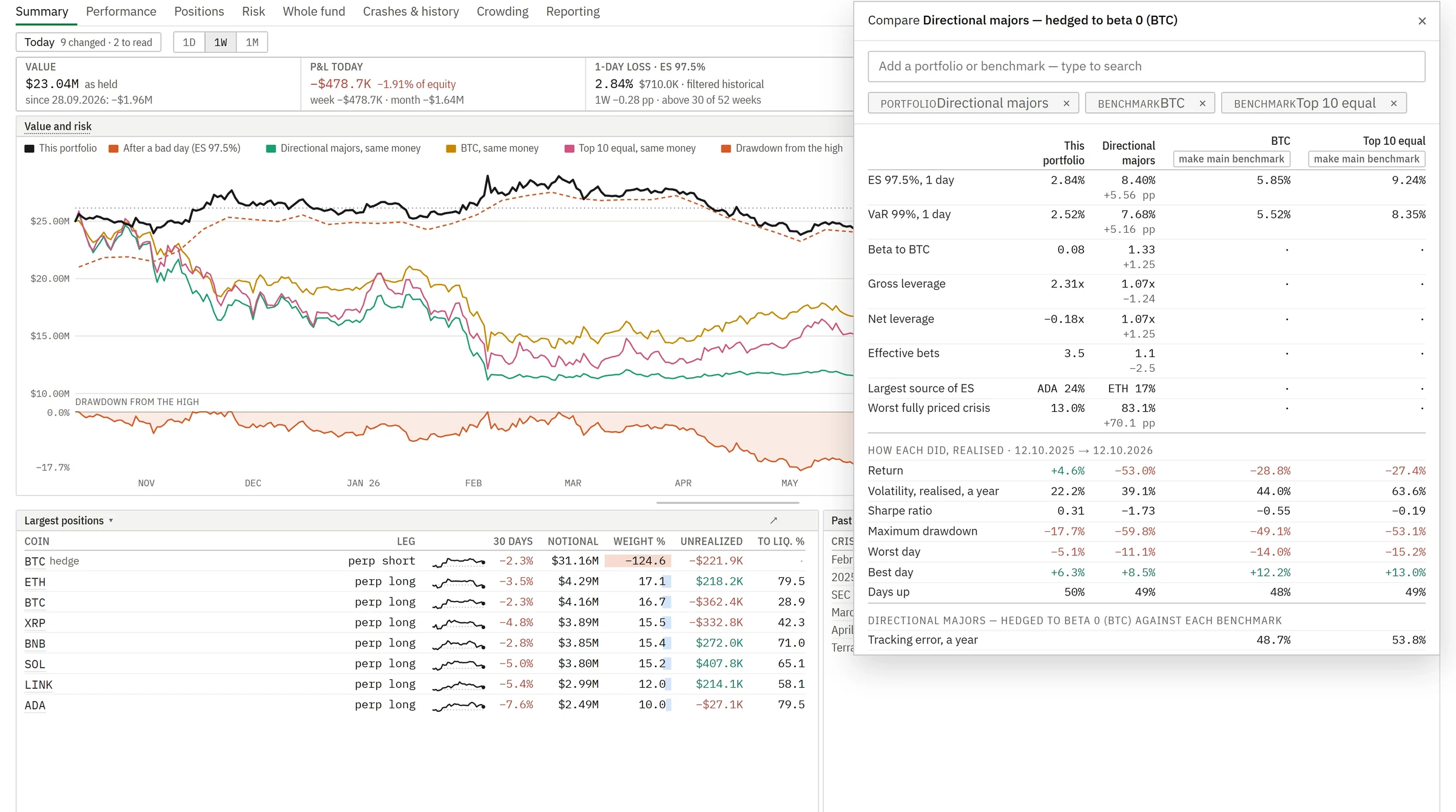
Weights changed by hand, then the portfolio measured as held and as described on the same days, with the trades it would take and what they would cost.
Change in one-day expected shortfall, from 8.40 to 8.09 percent, if part of the SOL position moved into bitcoin. The two trades would cost about $10,900.
Everything Pearlixa Scenarios covers.
What-if
- Weights changed by hand, long or short
- Measured as held and as described, on the same days
- Volatility, loss, beta, leverage and concentration, before and after
- The trades it would take, with impact, cost and days, and the risk of trading over them
- A portfolio built to the fund's objective and constraints, with those that bind
Hedging
- One perpetual future, held short, on any asset covered
- Sized to a beta the manager chooses, or to the least expected shortfall
- From the average beta or the beta on down days
- Today, and over the past year re-sized at each rebalance
Limits
- Value at risk, expected shortfall and volatility
- Gross and net leverage, largest position and largest share of shortfall
- Largest sector, a bitcoin stress, exit cost and the longest exit
- A drawdown stop, with re-entry after a cooldown or a recovery
- The firm's limits in one tree, changes approved by a second person by default
Through history
- With and without the limits, on the same days and costs
- Every breach and every stop
- Today's holdings over the past year, marked as hindsight
- Funding, trading costs by size and liquidations charged
The whole fund
- The traditional portfolio as one series of values or returns
- Counted every day and on trading days only
- Whole-fund expected shortfall, value at risk and volatility
- Crypto's share of the risk at other shares of capital
Comparison
- Up to six portfolios and benchmarks side by side
- Loss, volatility, beta, leverage and concentration
- The worst fully priced crisis, and tracking error against each benchmark
- Every stored portfolio rolled up into the firm's own figures
Every module reads the same portfolio.
Start with a call.
A short conversation about how your fund weighs a trade, a hedge or a limit today, followed by a live demo of Pearlixa Scenarios.
Book a call