Stress losses and exit costs for every portfolio.
Every portfolio is run through past crises and the fund's own scenarios, and the time and cost of selling it are measured in normal and stressed markets.
Stress testing and liquidity for crypto portfolios.
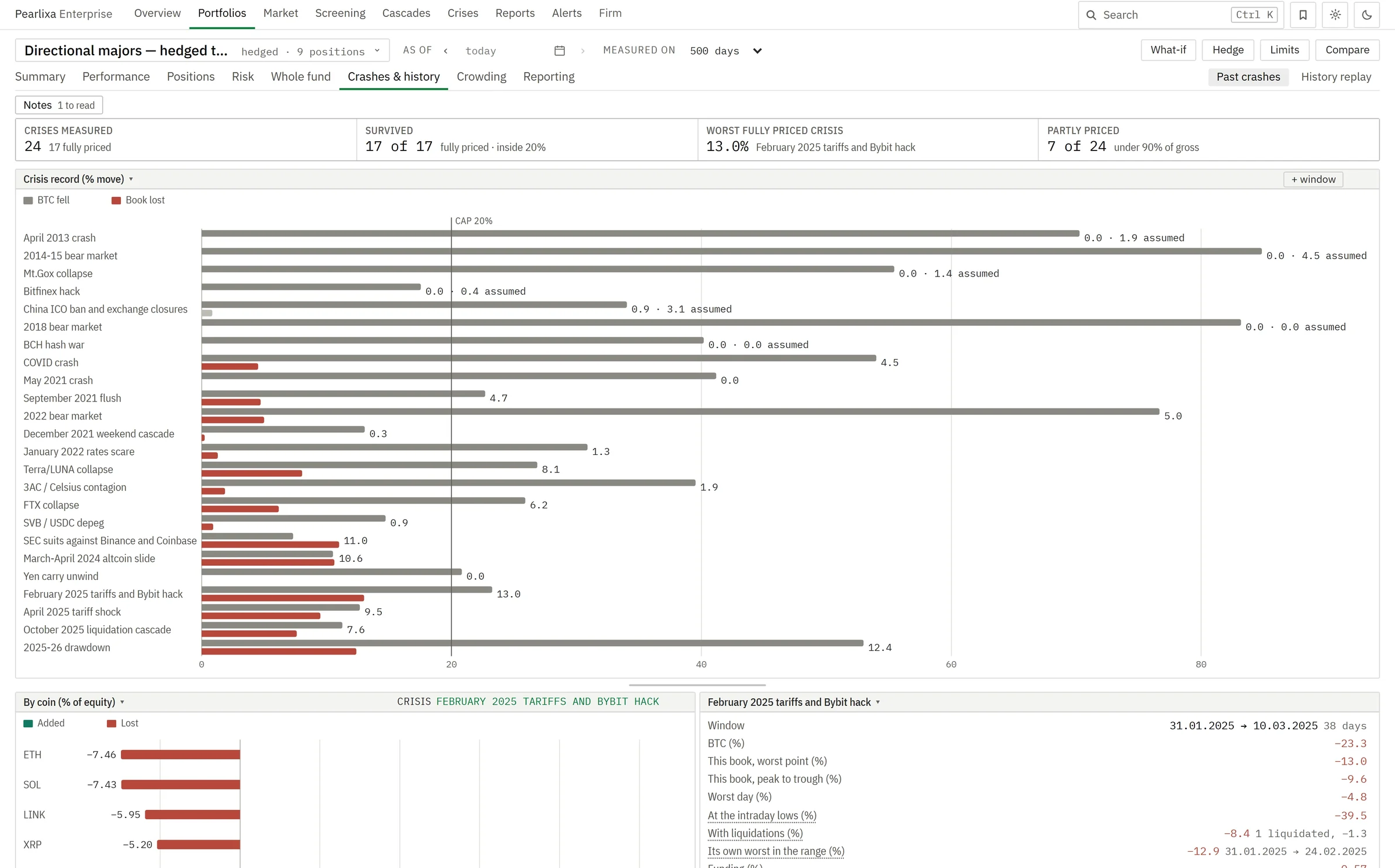
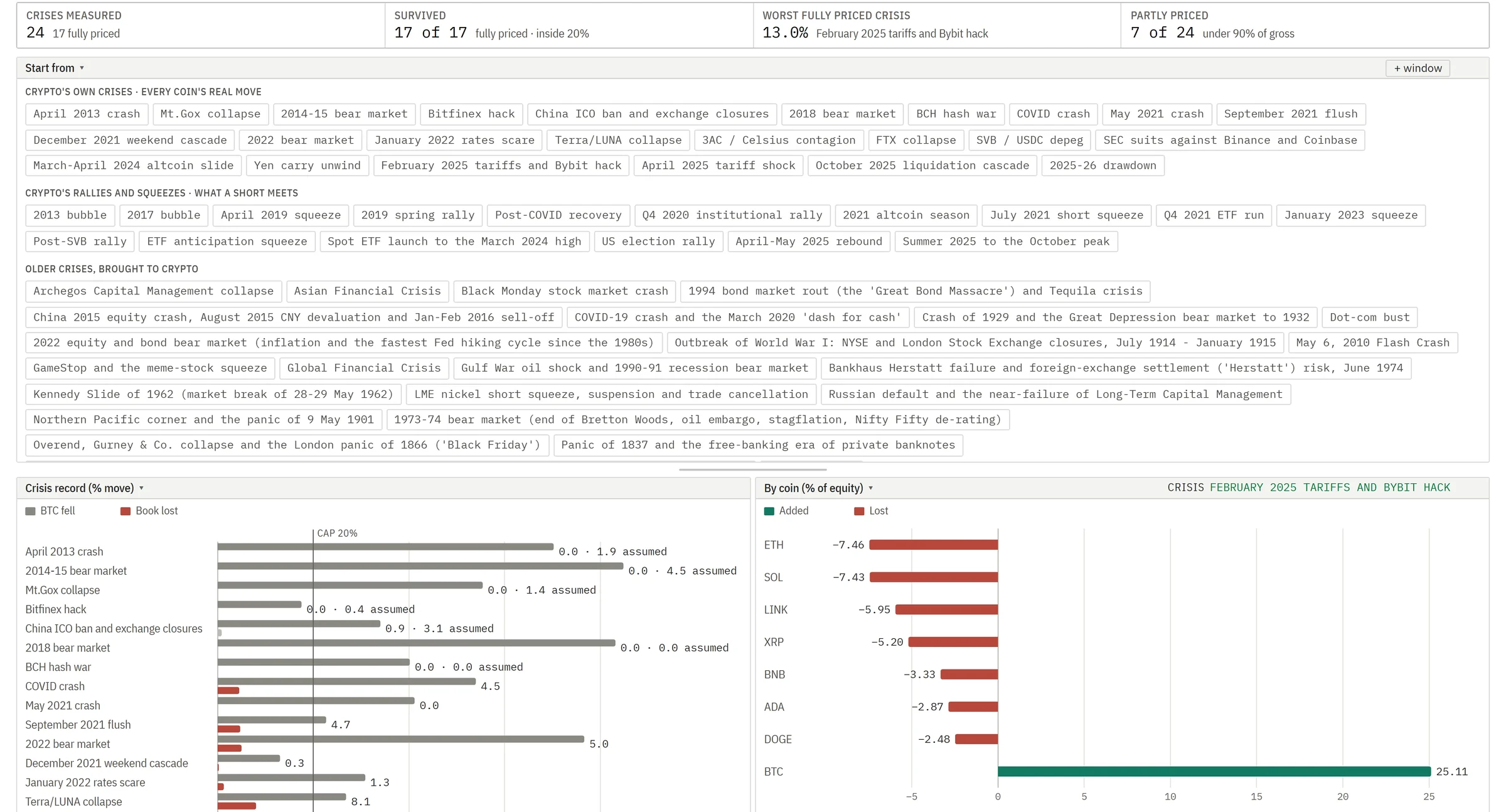
Pearlixa Stress takes the positions a fund holds today and runs them through every crypto crisis measured since the April 2013 crash, each on every asset's actual move in its window, at the daily close, at the intraday lows and with the liquidations a leveraged position would have met. Crypto's rallies and squeezes are measured in the same way for the short positions. The thirty-eight older crises, from the Panic of 1837 to the 2024 yen carry unwind, reach crypto by two routes: as the market's fall would pass to crypto today through its measured link to the S&P 500, and as the same mechanism breaking inside crypto.
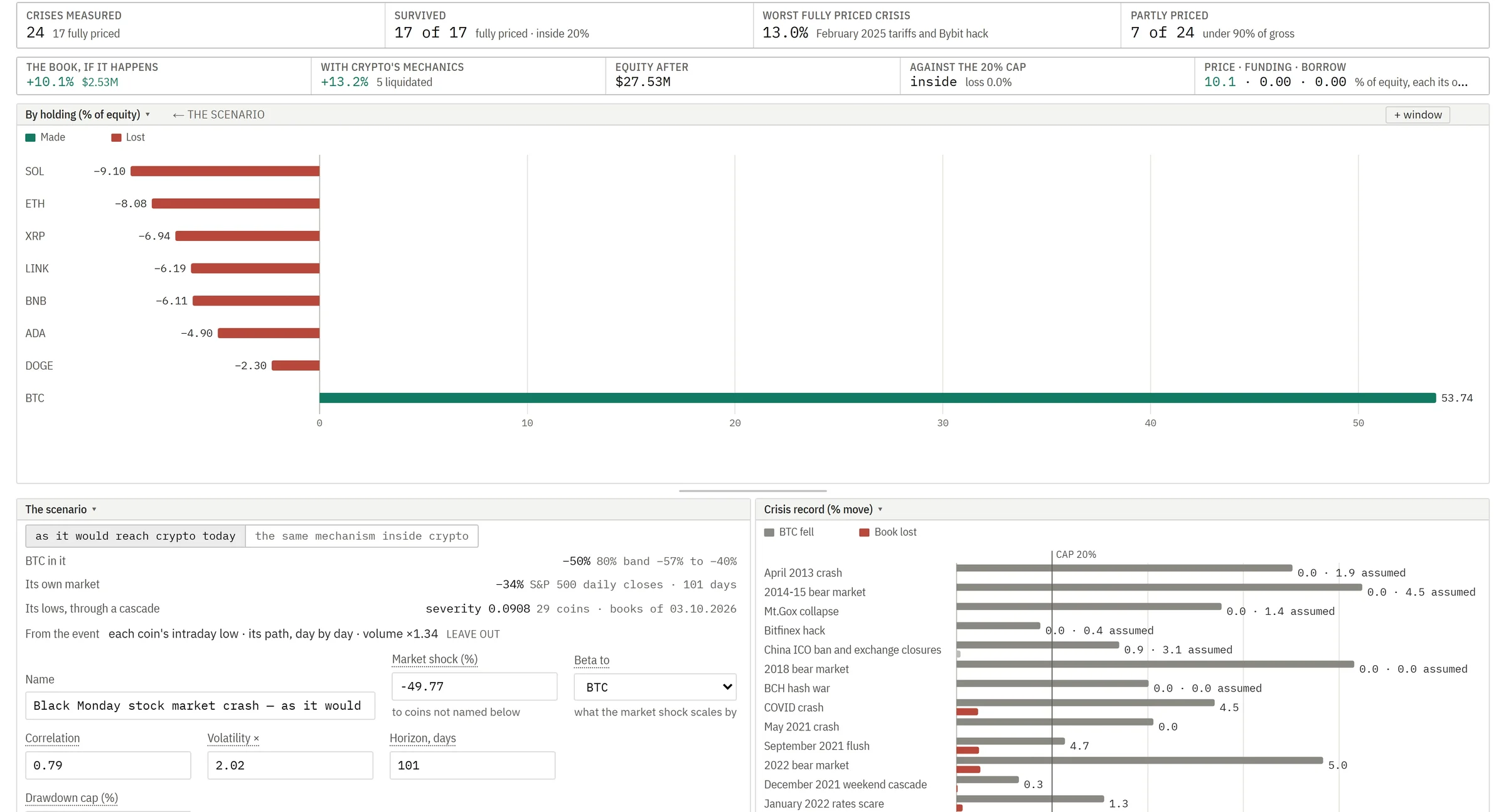
The fund can also set a scenario of its own: a market shock with moves for single assets, correlation, volatility, funding and a horizon, written from scratch or started from any crisis in the library, with crypto's own mechanics added where they apply, such as a liquidation cascade, a failed venue, a stablecoin off its peg or auto-deleveraging. Scenarios the firm approves are kept in its library and run on any portfolio, and every result is set against the fund's loss limit.
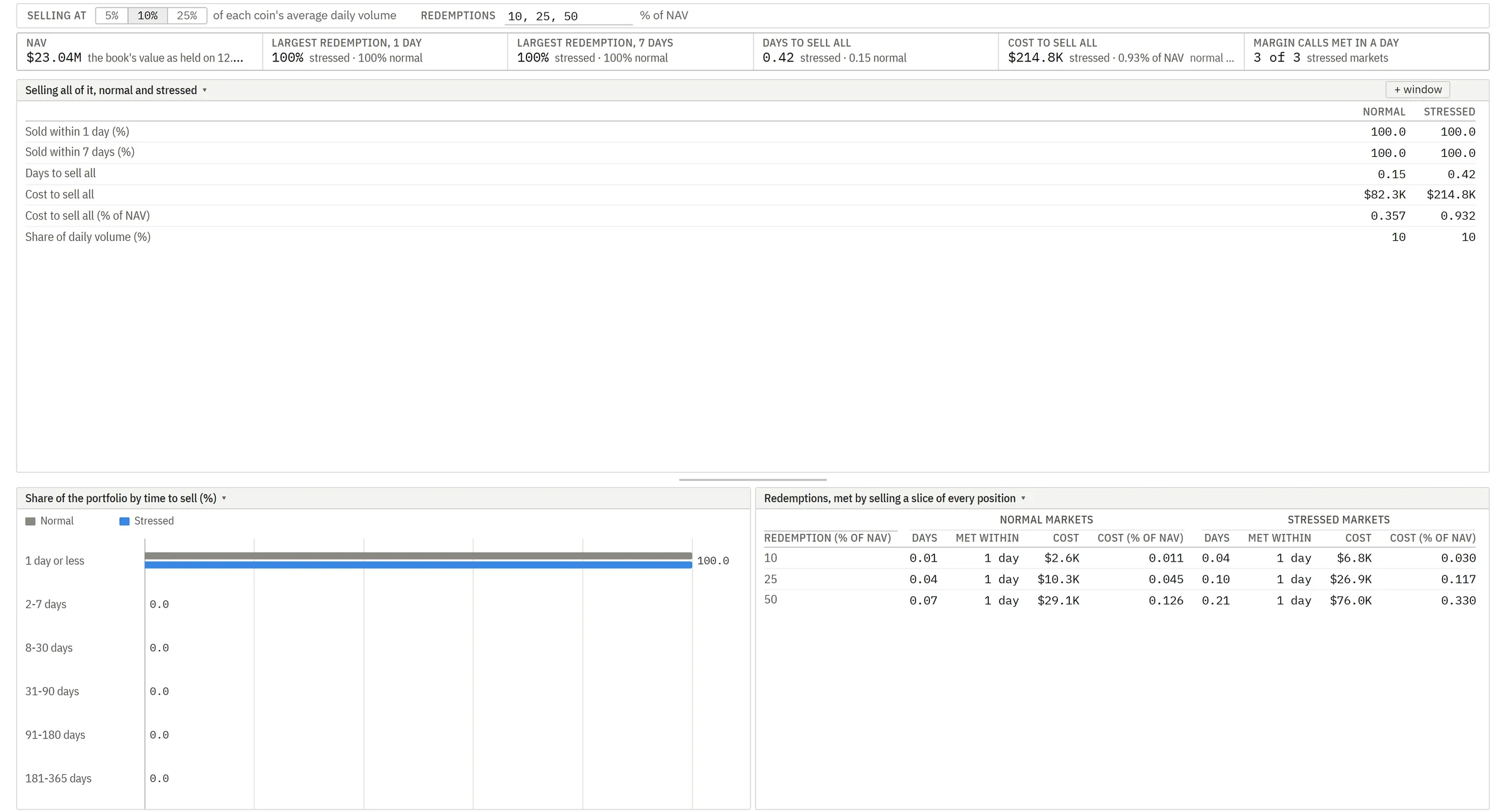
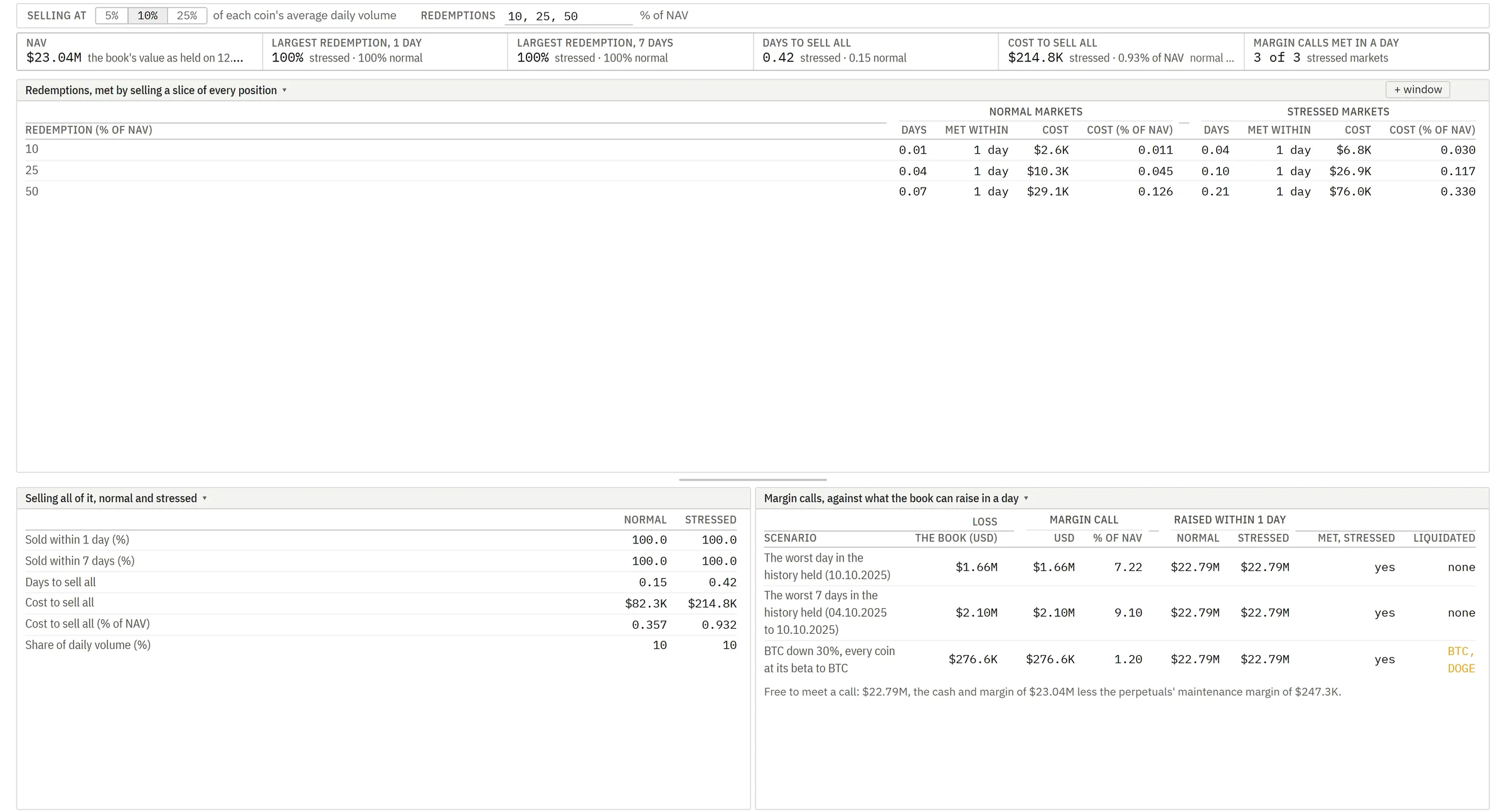
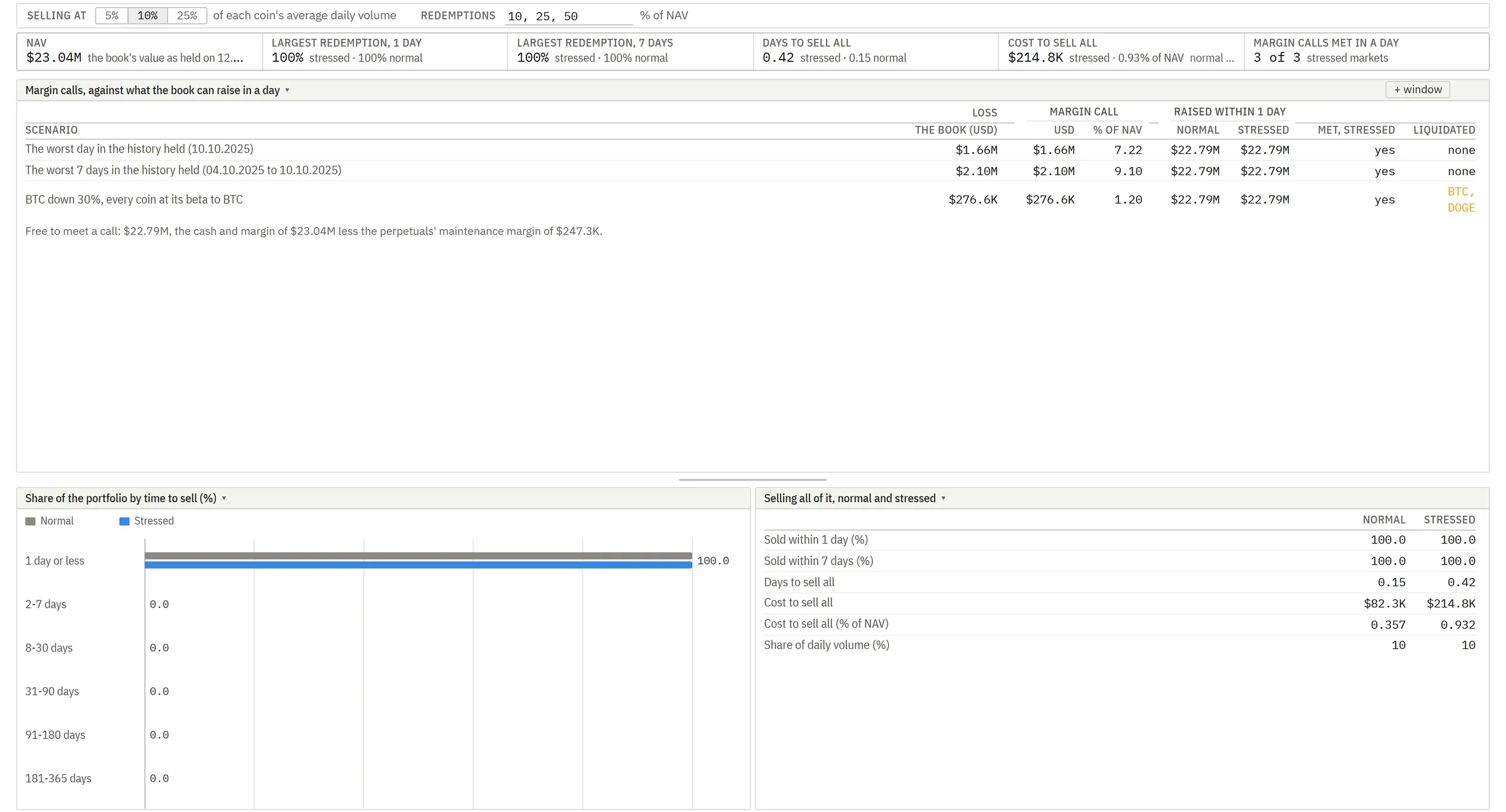
The liquidity pages measure how long the portfolio would take to sell and at what cost, in normal and stressed markets, the largest redemption it could meet, and whether it could meet a margin call on its worst day. The same figures go into the quarterly liquidity stress test report.
The crises and the exits, on one portfolio.
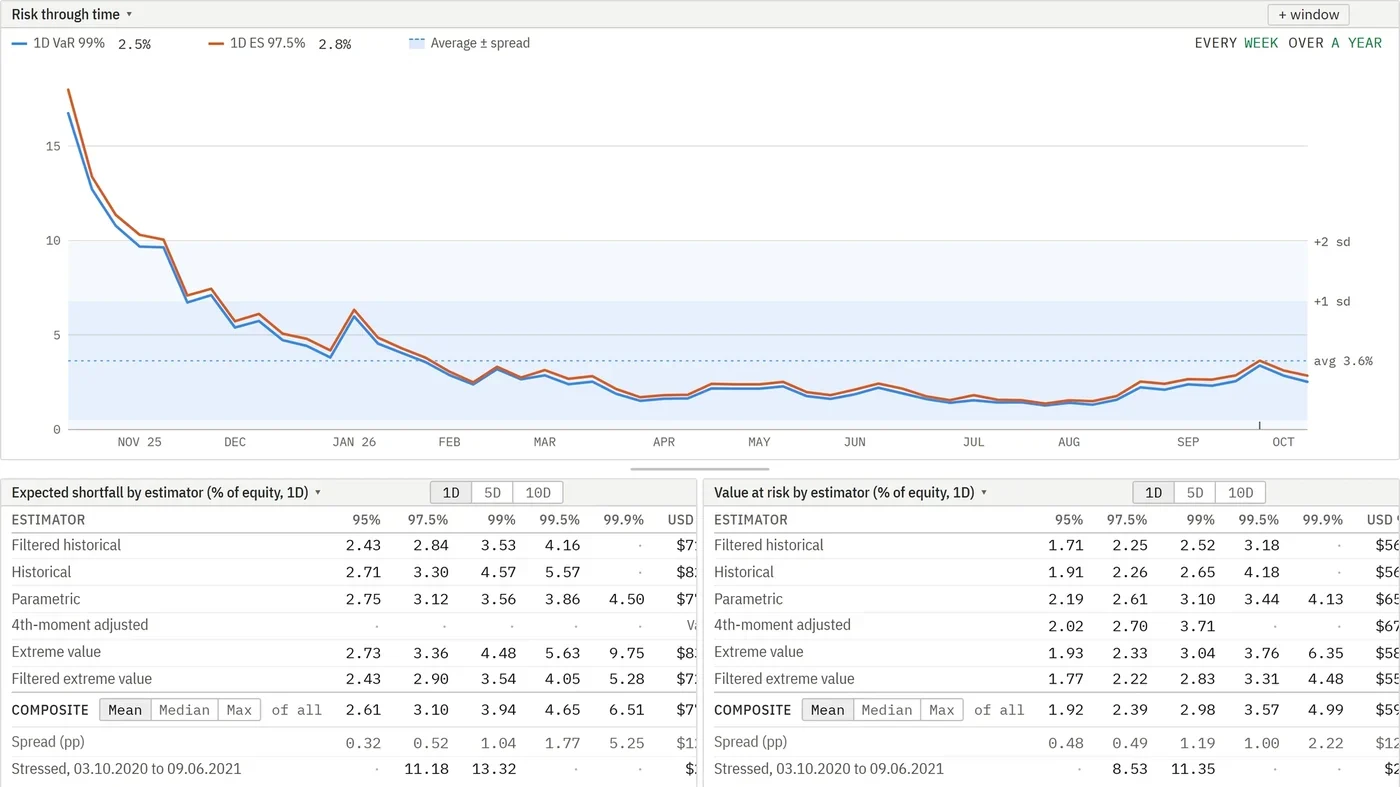
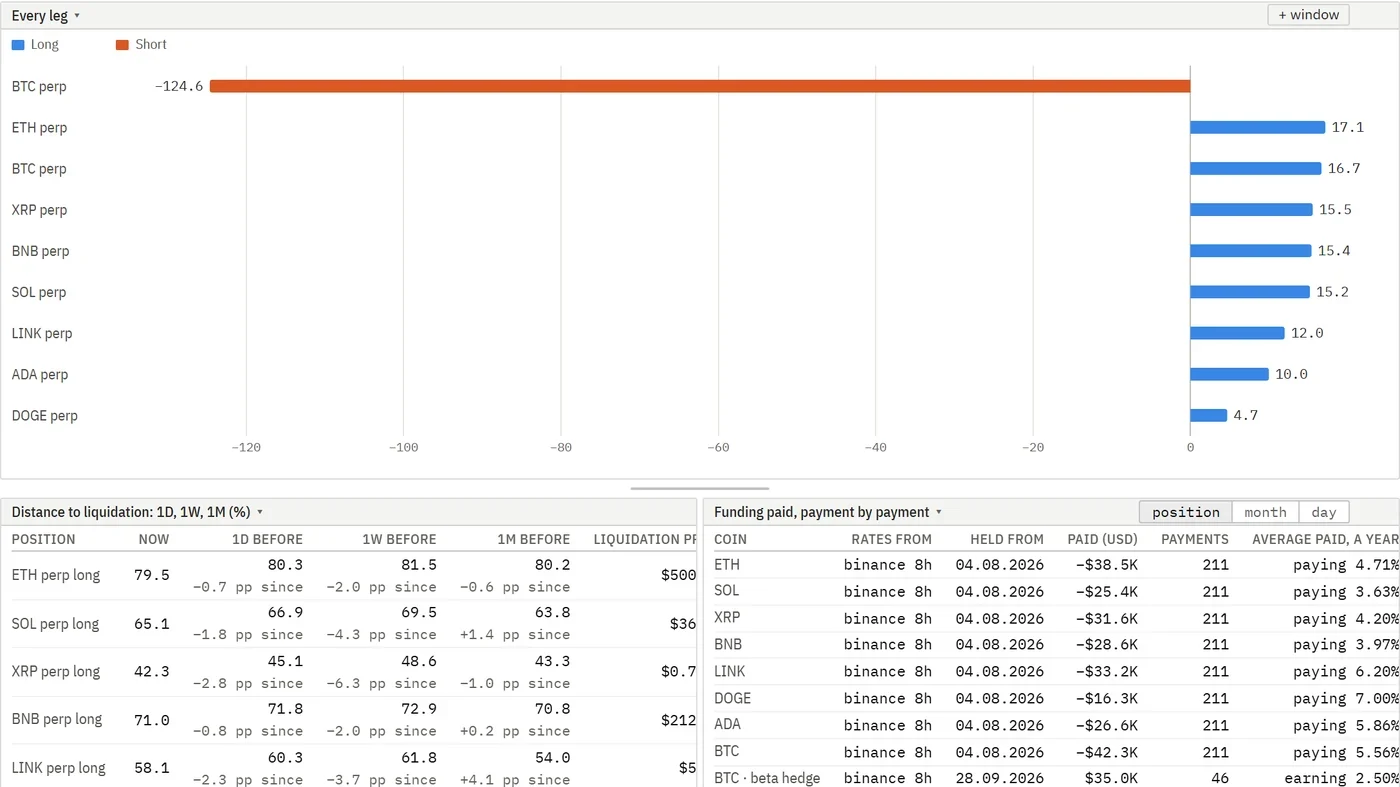
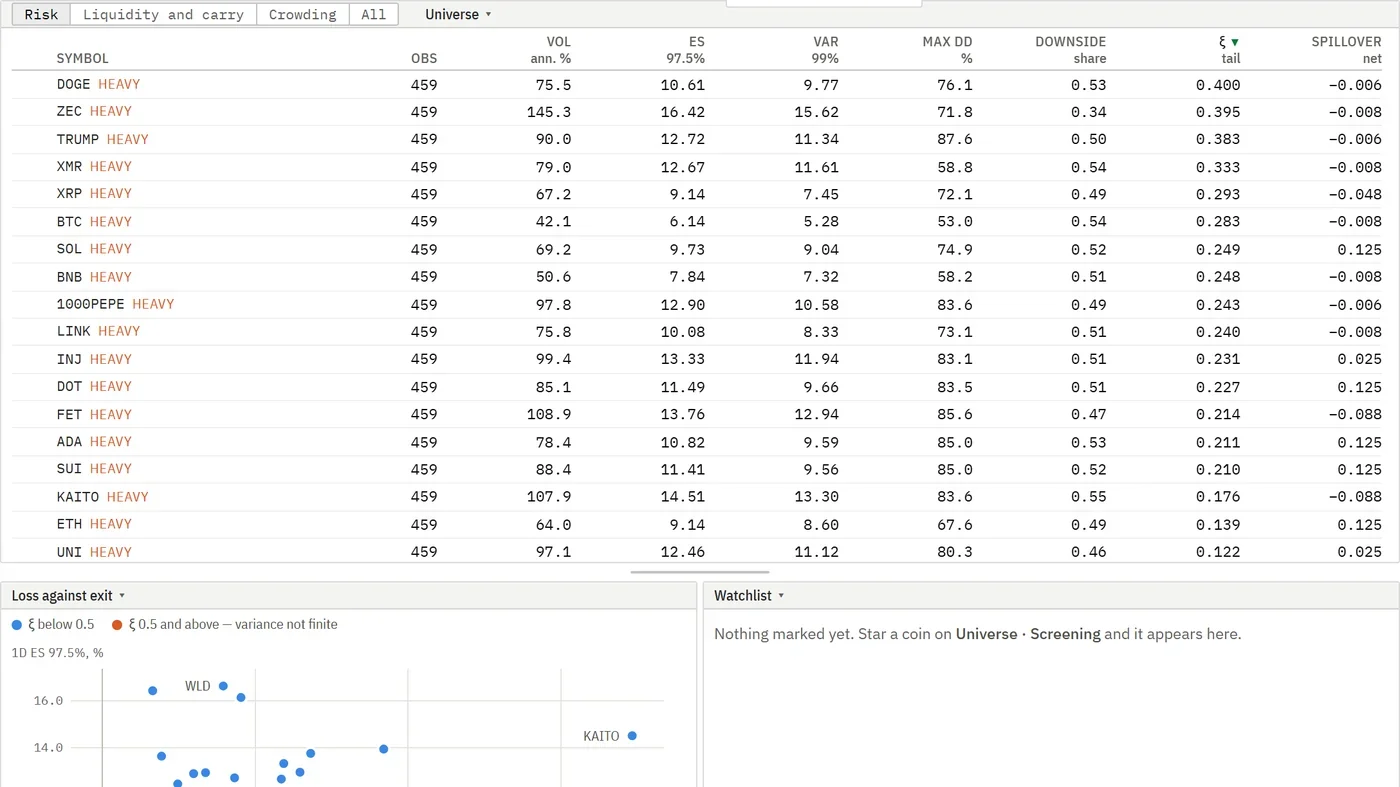
Six views from the stress and liquidity pages, shown on a demonstration portfolio.
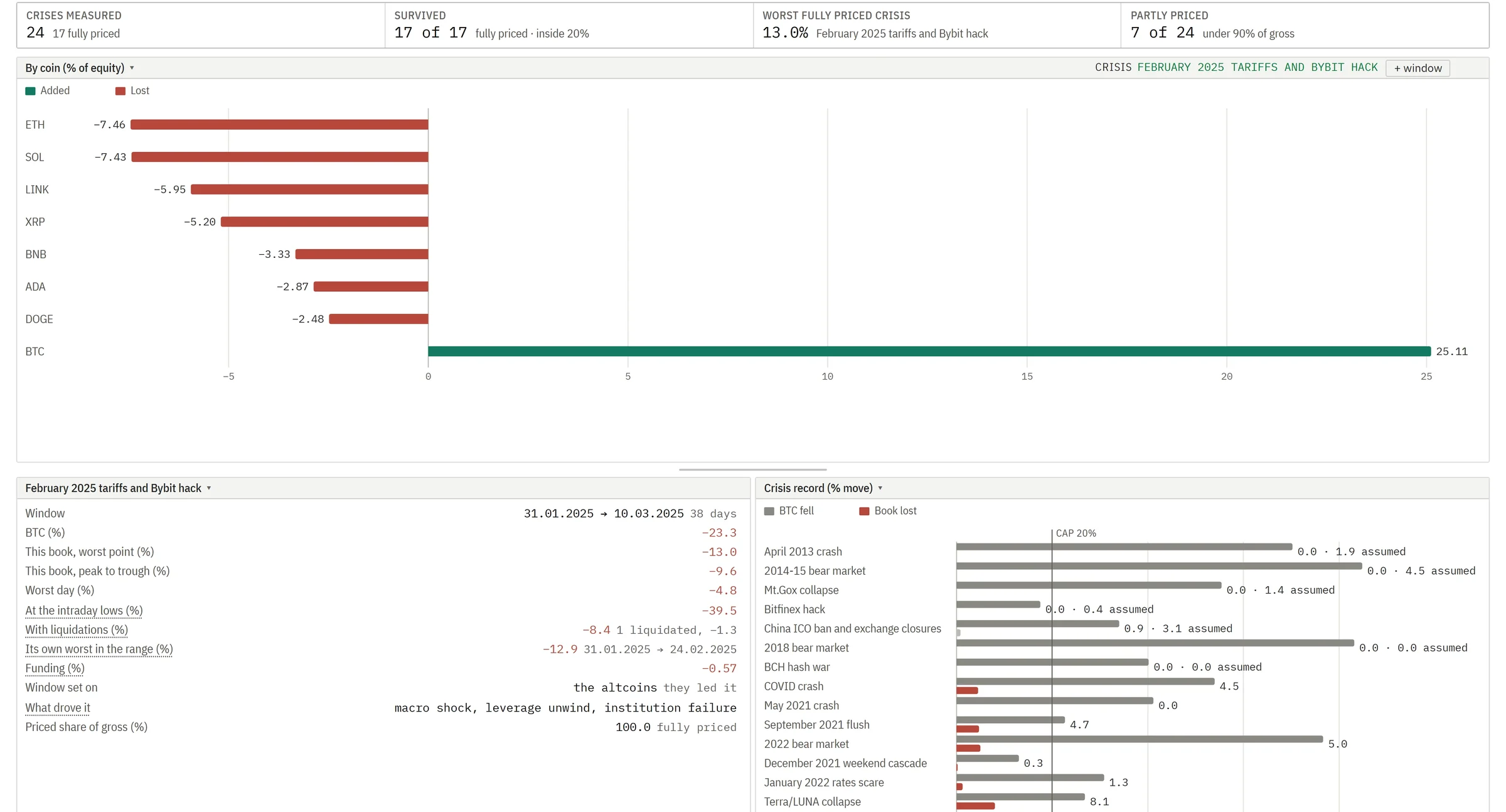
One crisis, asset by asset
Each asset's gain or loss within a single crisis, with the window, the worst point, peak to trough and the worst day.
Gain on the bitcoin hedge in the February 2025 tariffs and Bybit hack, as a share of equity, against losses of 2.5 to 7.5 percent on each long position.
Everything Pearlixa Stress covers.
Measured crypto crises
- Every crypto crisis measured since the April 2013 crash
- Each asset's actual move within each crisis's window
- At the daily close, at the intraday lows and with liquidations
- Exchange failures, depegs, contagion and liquidation cascades
- Rallies and squeezes, for the short positions
- Every crisis named in the fact sheet
Older crises
- Thirty-eight crises in equity, credit, currency and commodity markets
- From the Panic of 1837 to the 2024 yen carry unwind
- As the fall would reach crypto today, through its measured link to the S&P 500
- As the same mechanism breaking inside crypto
The fund's own scenarios
- Market shock and moves for single assets
- Correlation, volatility and funding
- Liquidation cascades, failed venues, depegs and auto-deleveraging
- Horizon from one day to one year
- Written from scratch or started from any crisis
- Approved scenarios kept in the firm's library
- Loss limit of 20 percent unless set otherwise
Selling the portfolio
- At 5, 10 or 25 percent of daily volume
- Normal and stressed markets
- Stressed: the lowest 30-day volume and the highest 30-day volatility
- Seven time-to-sell bands, from one day to over a year
- Days and cost to sell all of it
Redemptions and margin calls
- Redemptions of 10, 25 and 50 percent of NAV, or any size
- The largest redemption met within one day and within seven
- Margin calls on the worst day, the worst week and bitcoin down 30 percent
- Against the cash and margin free to meet a call
Regulatory reporting
- Quarterly liquidity stress test, following the ESMA guidelines
- AIFMD leverage, gross and commitment methods
- Annex IV risk inputs, filed by the fund's vendor or administrator
- Managers in the EU: all three; in the United States: the liquidity stress test
- In support of the fund's own process, not a determination of compliance
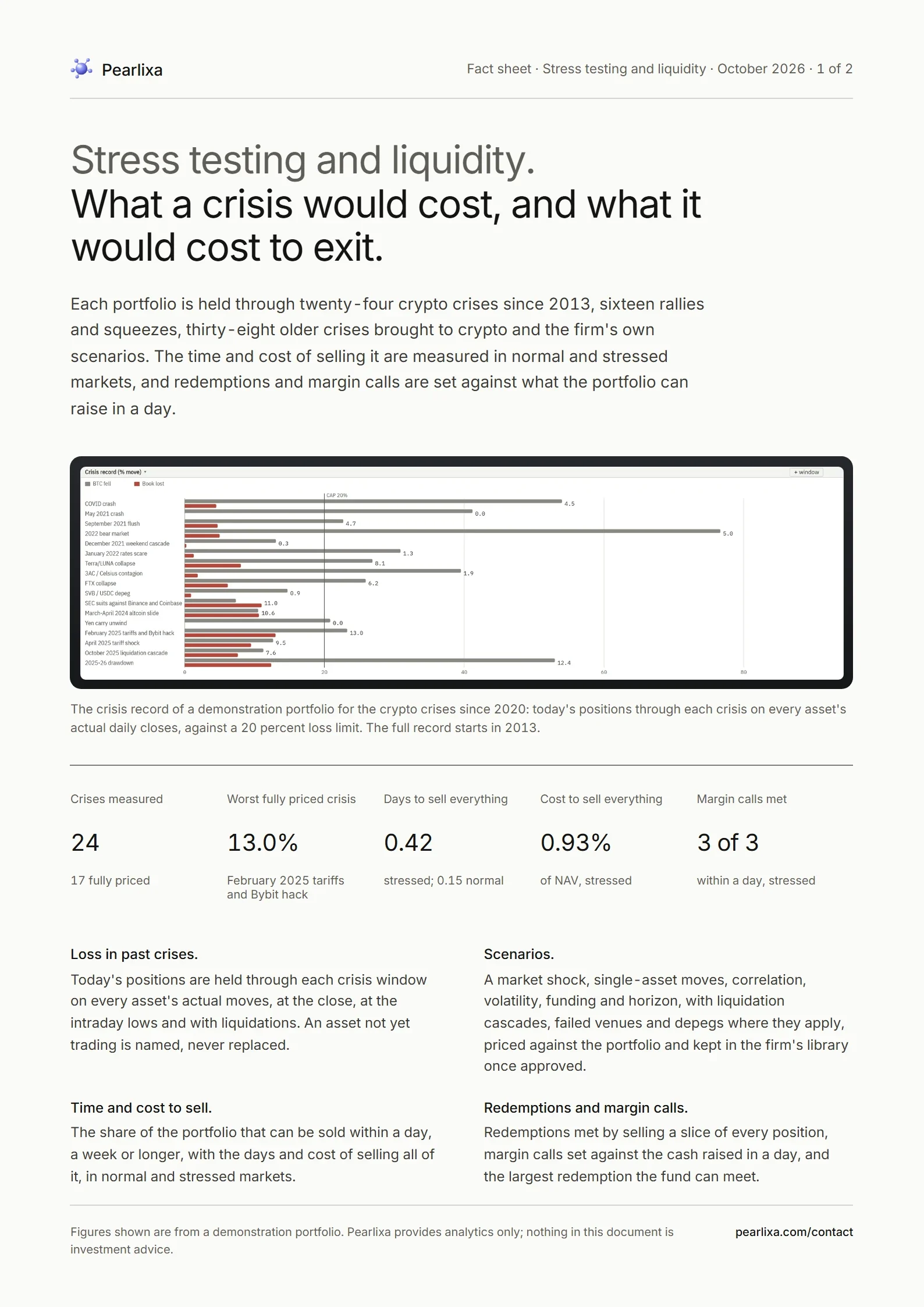
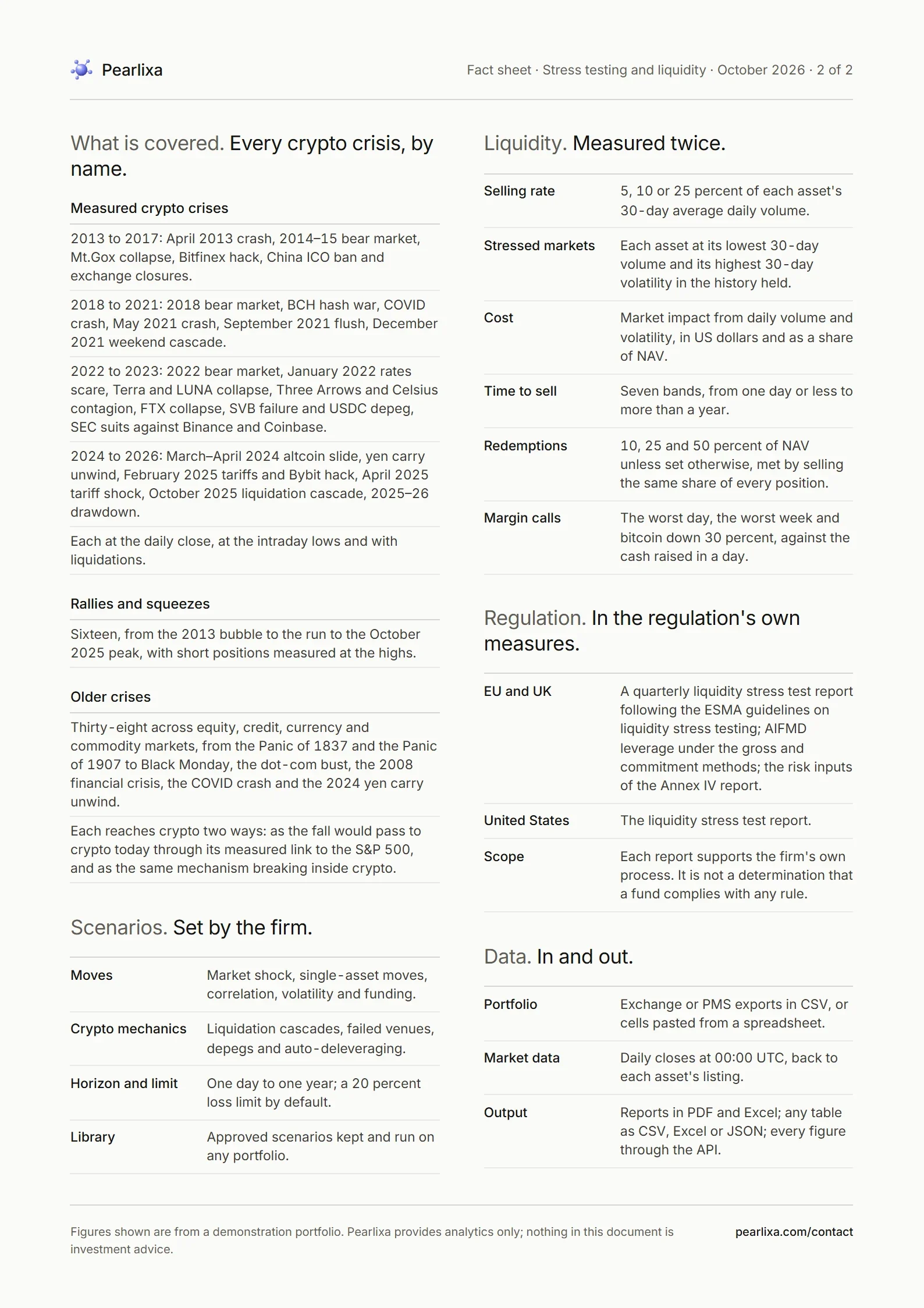
The module on two pages, to keep.
Written for the committee's file: every crypto crisis by name, the older crises, the scenario and liquidity settings, the regulatory reports and the data that goes in and out.
Stress testing and liquidity fact sheet ↓PDF, two pages, 420 KBEvery module reads the same portfolio.
Start with a call.
A short conversation about how your fund stress-tests its crypto portfolios today, followed by a live demo of Pearlixa Stress.
Book a call